
Key Takeaways
- Office air carries dust mites, mould spores, and recirculated pollutants that irritate your eyes throughout the day.
- Screens reduce your blink rate, which compounds dryness caused by low indoor humidity.
- Simple workspace adjustments can reduce daily irritation.
- Persistent symptoms may point to dry eye syndrome rather than allergies alone.
- An eye exam can identify the source and guide the right solution.
Your Office Might Be Working Against Your Eyes
Your eyes feel fine at home in the morning. However, by mid-afternoon at the office, your eyes are red and itchy and you find it increasingly difficult to focus. Nothing changed about your health, but something about your environment certainly did.
The air inside downtown office buildings can contain a range of irritants that may contribute to eye-related discomfort. If your symptoms seem persistent rather than seasonal, dry eye therapy with our team at Downtown Vision Care may be an option worth exploring.
Common Indoor Allergens in Office Spaces
What Triggers Eye Irritation at Your Desk
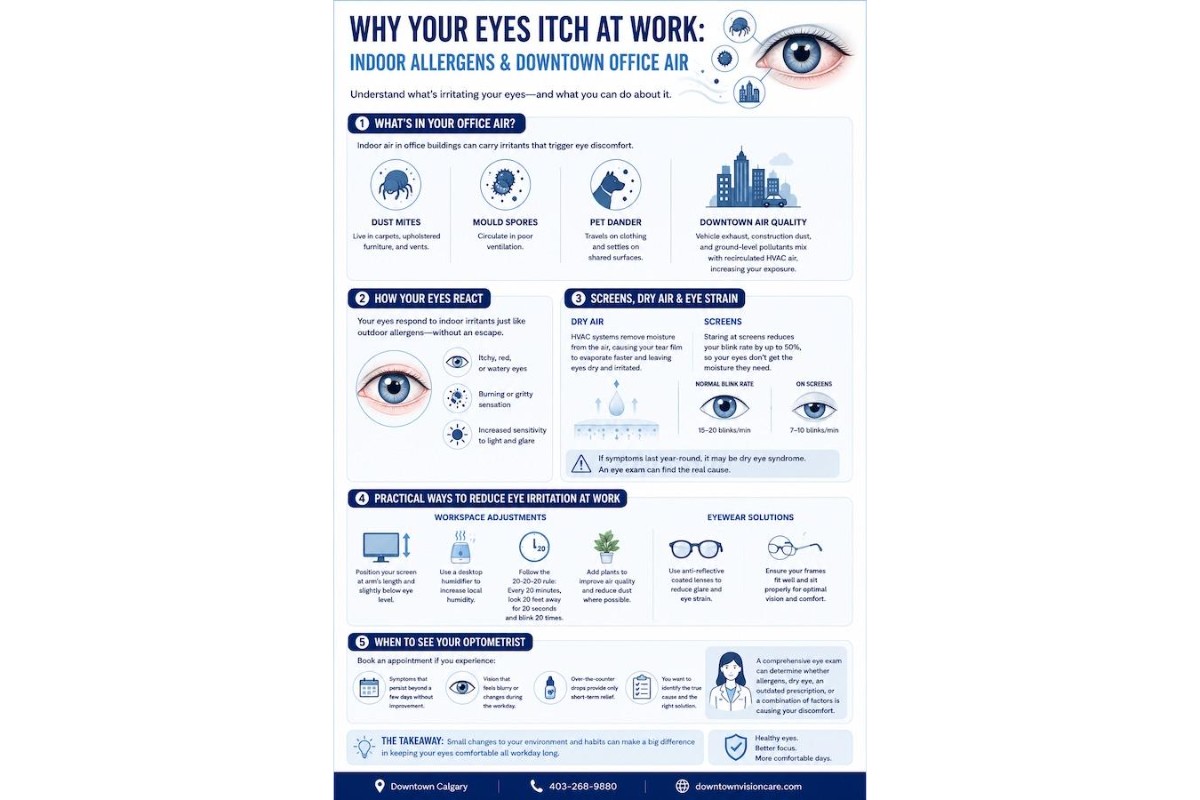
Most office irritants are invisible. For instance, dust mites settle into carpets, upholstered furniture, and ventilation ducts. Mould spores circulate when ventilation is poor, which is common in sealed office buildings with limited fresh air intake. Pet dander travels in on clothing and settles on shared surfaces, affecting colleagues who have never owned a pet.
Air Quality Factors Unique to Downtown Buildings
Downtown office buildings face their own air quality challenges. Older buildings may draw in vehicle exhaust, particulate matter from construction, and ground-level pollutants that mix with recirculated HVAC air. That recycled airflow concentrates particles that would otherwise disperse in an open space, meaning that your exposure compounds over the course of a full workday.
How Your Eyes React to Poor Office Air
Your eyes respond to airborne irritants the same way they respond to outdoor allergens. However, the enclosed setting of an office means that there is no escape. Pay attention to:
- Persistent itching, redness, or watery eyes
- Burning or gritty sensation throughout the workday
- Increased sensitivity to screen glare or overhead lighting
These are all signs your environment may be working against your eye comfort. If they persist throughout the workday, it’s worth taking a closer look at what’s behind them.
The Connection Between Screens, Dry Air, and Eye Strain
Why Office Environments Dry Out Your Eyes
Office HVAC systems pull moisture out of the air to regulate temperature, which drops indoor humidity well below comfortable levels. Your tear film also evaporates faster in dry air, leaving the surface of your eyes exposed and therefore more prone to irritation.
Normally, we blink often to refresh our tears and keep our eyes lubricated, but screen use reduces our blink rate, making our eyes more likely to dry out.
When Irritation Signals More Than Allergies
Seasonal allergies come and go. However, if your eye symptoms are consistent regardless of the season, dry eye disease is a likely culprit.
At Downtown Vision Care, we can help you distinguish between allergic reactions and dry eyes. Our dry eye exams evaluate tear quality and volume and help us determine the underlying cause of your discomfort.
Practical Ways to Reduce Eye Irritation at Work
Simple Adjustments to Your Workspace
- Position your screen at arm’s length and slightly below eye level, so that your eyelids naturally cover more of your eyes.
- Place a desktop humidifier near your workstation to raise local humidity.
- Practice the 20-20-20 rule. Every 20 minutes, look at something 20 feet away for at least 20 seconds, and blink 20 times.
Eyewear as a Daily Solution
- Choose prescription lenses with an anti-reflective coating. This reduces the amount of scattered light that reaches your eyes.
- Wear frames that fit properly. If your lenses sit too far to the side or slide down your nose, this changes your viewing angle and may contribute to eye strain.
When to Request an Appointment with an Eye Care Professional
Some eye irritation resolves on its own with rest and minor adjustments. There are situations, however, where professional input is the more productive path forward. If you experience any of the following, you should visit your optometrist:
- Symptoms that persist beyond a few days without improvement
- Vision that feels blurry or changes during the workday
- Over-the-counter drops provide only short-term relief
A comprehensive eye exam can identify whether allergens, dry eye, an outdated prescription, or a combination of factors is driving your discomfort.
At Downtown Vision Care, we offer practical solutions designed to fit your daily routine, from dry eye therapy to our specialty contact lens program for patients whose current lenses aren’t holding up at the office. If your eyes are bothering you at work, book an appointment at our downtown Calgary practice today and take the first step towards more comfortable vision.