
You are sitting at your desk, eyes fixed on your screen, when a small spot drifts across your field of vision. You look directly at it, and it floats away. A moment later, it is back. If that sounds familiar, you are not alone, and the experience has a name.
Eye floaters are small shapes that drift across your vision as a result of changes inside the gel-like substance that fills your eye, and while they are harmless, certain accompanying symptoms are worth taking seriously.
What Eye Floaters Actually Are
The inside of your eye is filled with a clear, gel-like material called the vitreous. Over time, small fibres within that gel clump together. These cast shadows on the retina, the light-sensitive tissue at the back of the eye. The brain perceives these shadows as floating objects.
Floaters tend to appear more clearly when you are looking at something bright, such as a clear sky or a white computer screen. They follow the movement of your eye with a slight lag, drifting slowly when your gaze settles. That distinctive motion is one of the ways an optometrist can identify them during an exam.
Common Types of Floaters You May Notice
Floaters present in various forms depending on how the internal fibres cluster together. You might observe:
- Small, dark specks or dots
- Thin, thread-like strands
- Clusters that resemble cobwebs
- Faint, shadowy rings
One consistent trait is movement. When your eye moves, the floater follows, then drifts slightly past where you are looking.
Who Is More Likely to Experience Floaters?
Adults over 50 tend to notice floaters more frequently, largely because the vitreous naturally changes in consistency as the years go on. However, age is not the only factor at play.
Nearsighted individuals often notice these symptoms earlier in life. The shape of a nearsighted eye can place more stress on the internal gel, leading to earlier changes. Individuals with a history of eye procedures or inflammation should also monitor their vision for any changes.
Identifying Urgent Warning Signs
Most floaters are benign and simply require monitoring. However, certain changes in how they appear can indicate something that needs prompt attention from an eye care professional.
Reach out to your optometrist if you notice any of the following:
- A sudden and significant increase in the number of floaters
- Repeated Flashes of light, especially in your side vision
- A dark shadow or curtain moving across your field of view
- A sudden loss of side vision
These symptoms can signal a more serious concern, such as a retinal tear or retinal detachment.
If the change in symptoms lasts more than an hour, you should seek urgent care. Retinal tears and detachments are most successfully treated within the first 24-28 hours. Do not delay going to see your optometrist.

What to Expect During a Floater Assessment
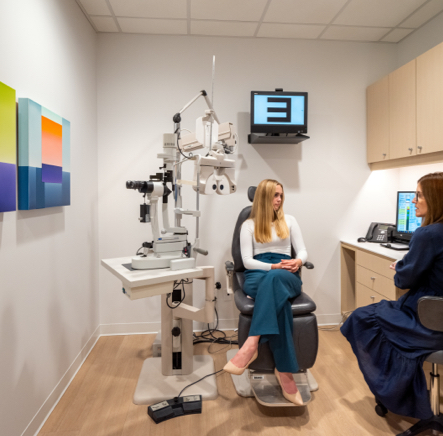
A thorough eye exam provides a level of detail that personal monitoring cannot match. When floaters are a concern, an optometrist will dilate your eyes and use specialized imaging to directly view the internal structures of the eye.
At Downtown Vision Care, the team relies on advanced technology to evaluate the retina and vitreous in detail. Fundus photography captures high-resolution images of the back of the eye, while optical coherence tomography (OCT) provides cross-sectional views of the retinal layers that aren’t visible to the naked eye.
These tools provide a detailed map of the retina and the vitreous, making it easier to track subtle changes over time. By maintaining a digital record of your eye health, a doctor can compare current images with previous results.
This process offers one of the most reliable methods for detecting eye conditions before they cause permanent damage.
What Are the Next Steps?
Annual eye exams are one of the most practical tools for tracking changes in floater activity over time. Establishing a baseline for your eye means any new developments are easier to identify. If your prescription has not been reviewed recently, that appointment can serve double duty. Your glasses can be updated at the same visit if we determine a change would improve your vision.
You can Request an appointment online or by phone at Downtown Vision Care in downtown Calgary. When you call or submit your request, note any recent visual changes you have observed, including when they started. That information gives us a more complete picture from the moment you sit down, and it makes the most of your time in the chair.