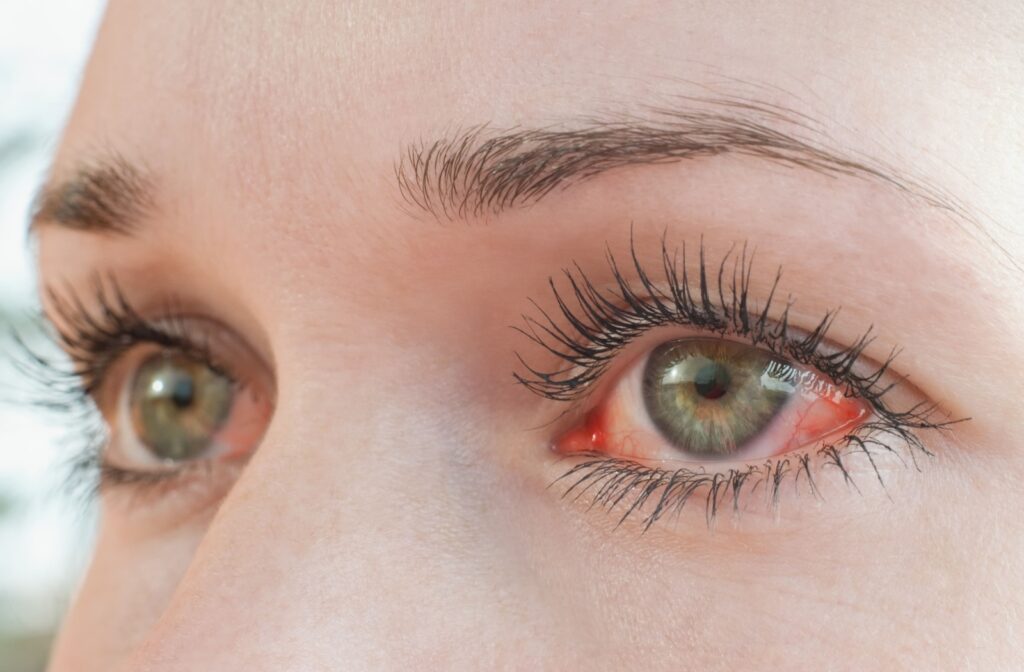
Pollen season brings a familiar set of challenges, and for contact lens wearers, they often feel worse. Itchy, watery, and irritated eyes get harder to manage when there’s a lens sitting on the surface, trapping pollen against the eye and making symptoms linger longer than they would without contacts. What might seem manageable in winter can become a real obstacle to comfort and clear vision by spring.
Contact lens wearers can manage seasonal allergy discomfort through a combination of daily habits, protective eyewear, and guidance from an optometrist who understands how allergies affect lens wear.
Why Pollen Season Is Harder for Contact Lens Wearers
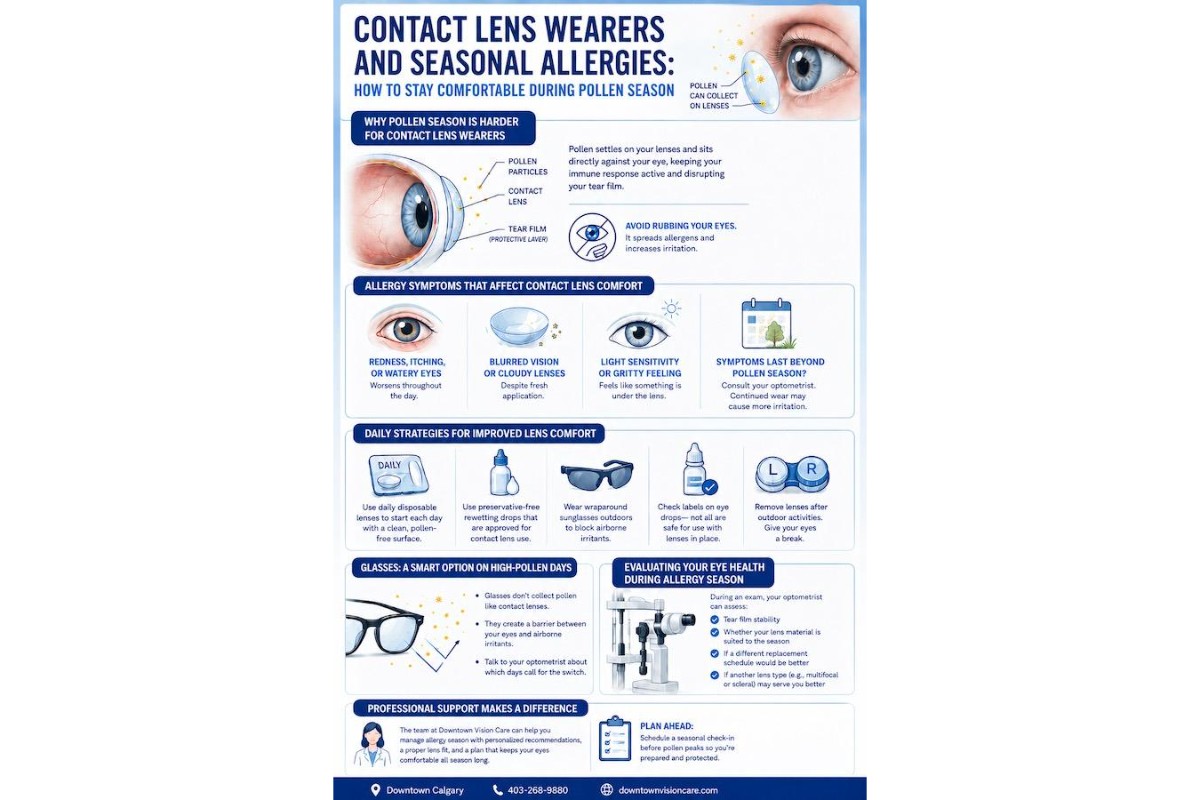
Your contact lenses act as a surface where airborne particles collect. Pollen settles on the lens, sits directly against your eye, and keeps your immune response running high. That steady irritation disrupts your tear film, the thin protective layer that keeps your eyes lubricated and clear.
When eyes feel itchy, the natural instinct is to rub them. Resist the urge to rub your eyes and protect your long-term ocular comfort instead.
Allergy Symptoms That Affect Contact Lens Comfort
Some symptoms are easy to dismiss as general tiredness or screen fatigue..
Watch for these common signs and symptoms of eye allergies:
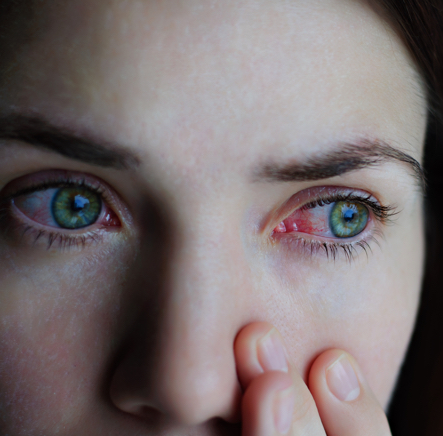
- Redness, itching, or persistent watering that worsens throughout the day
- Blurred vision or a cloudy film on your lenses
- Sensitivity to light or a gritty sensation, as though something is caught under the lens
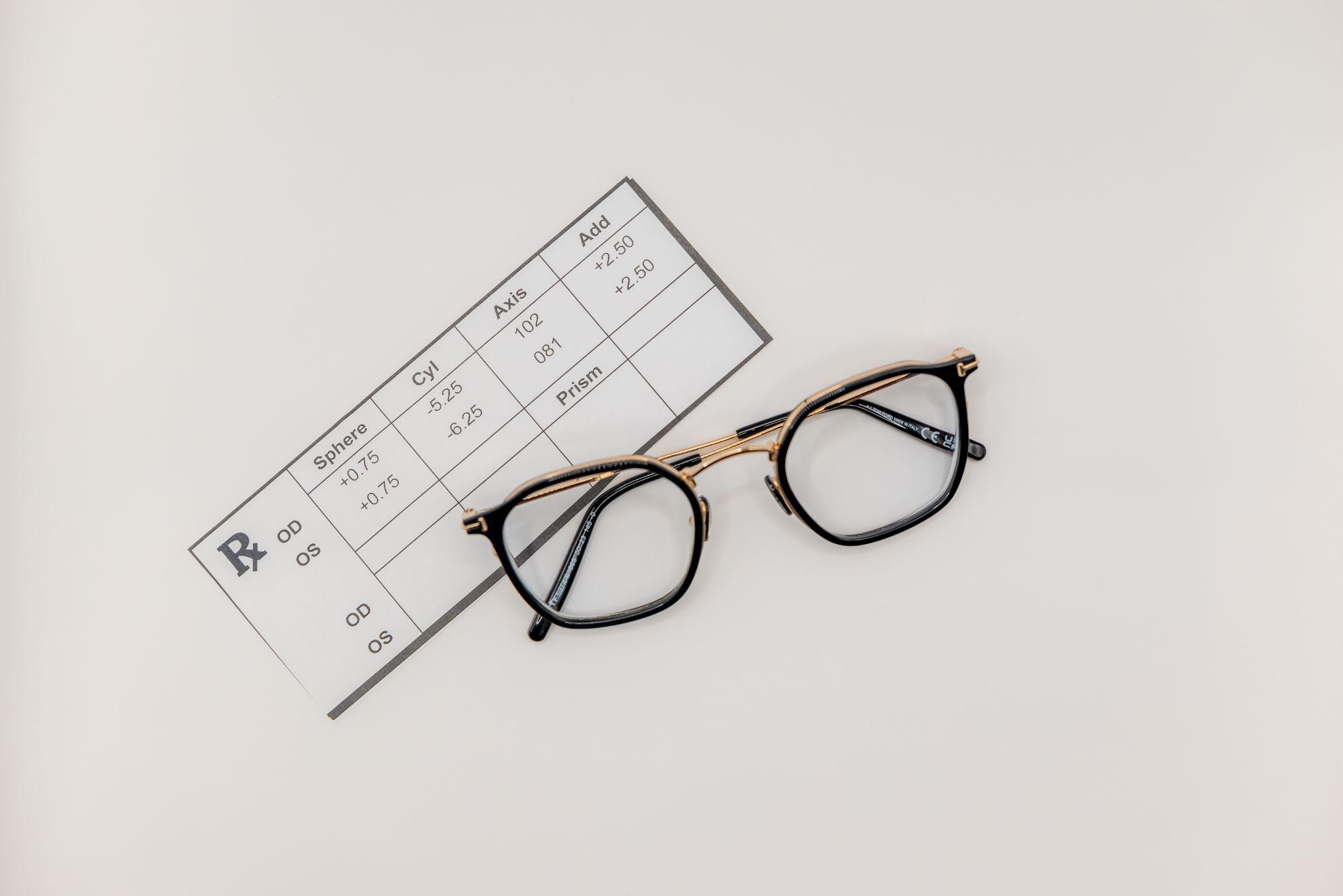
A contact lens exam and fitting can help determine whether your current lenses are the right match for your eyes during allergy season.
Daily Strategies for Improved Lens Comfort
Small adjustments to your lens routine can make a noticeable difference during peak pollen months. Protect your eyes by making simple modifications to your daily care habits. Incorporate these practices into your daily routine:
- Switch to daily disposable lenses so you start each day with a clean, pollen-free surface
- Use preservative-free rewetting drops that are specifically approved for use with contact lenses
- Wear wraparound sunglasses outdoors to create a physical barrier against airborne irritants
- Check the label on any eye drops before applying — not all are safe for use with lenses in place
Remove your lenses promptly after spending time outside. Giving your eyes a physical break prevents allergens from resting against the surface for the rest of the evening.
Choosing Glasses When Pollen Counts Peak
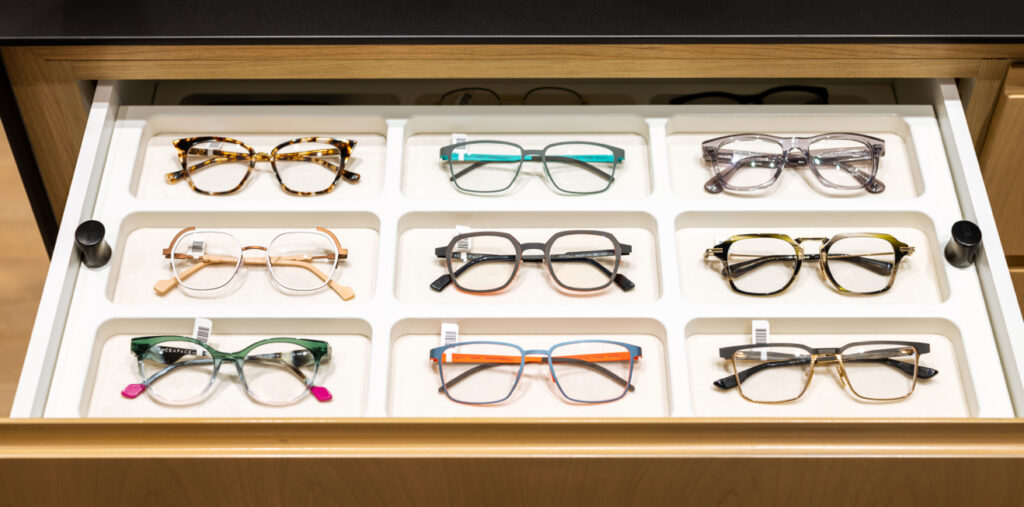
On high-pollen days, the most straightforward solution is sometimes to set the contact lenses aside altogether. Glasses do not collect pollen the way contact lenses do, and well-fitted frames keep irritants at a greater distance from the eye surface.
Consult your optometrist and assess which days warrant that transition. Rotate between lenses and glasses appropriately and keep your eyes comfortable across the seasons.
Evaluating Your Eye Health During Allergy Season
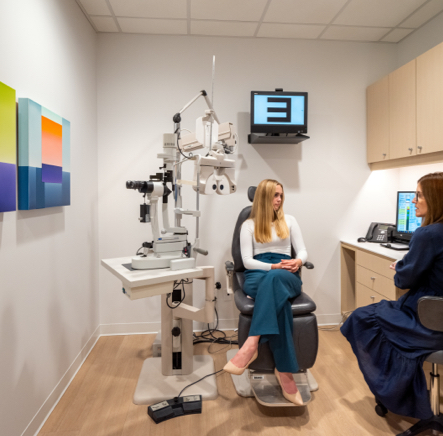
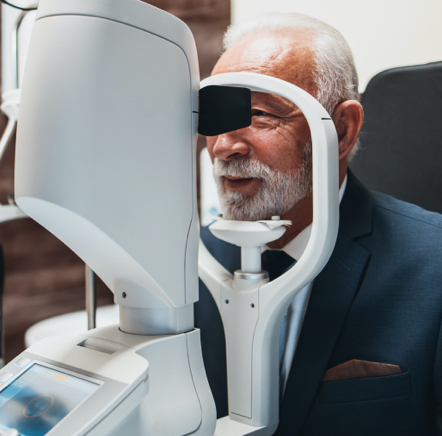
Allergy season changes the conditions your eyes work in, and a routine lens prescription does not always account for those changes. During an exam, your optometrist can evaluate your tear film health and assess whether your current lens fit is appropriate for the added demands of allergy season.
Your optometrist can assess several elements to improve your comfort, such as:
- Tear film stability, which affects how long lenses stay comfortable throughout the day
- Whether your current lens material is suited to seasonal conditions
- If a different replacement schedule would serve you better
For symptoms that don’t respond to over-the-counter options, prescription eye drops can offer stronger relief. Dual-action drops that combine an antihistamine with a mast cell stabilizer require a prescription and target both the immediate itch and the underlying allergic response that keeps symptoms going.
Most prescription drops are applied with lenses removed, and you typically need to wait 10 to 15 minutes before putting your contacts back in, so working the drops into your daily routine takes a bit of planning. Your optometrist can recommend the right option for your symptoms and your contact lens routine.
Professional Support for Your Vision Needs
The team at Downtown Vision Care can offer specific recommendations for your vision needs based on how your eyes respond to pollen season. Schedule a seasonal check-in before pollen counts reach their peak and have a solid plan in place. That kind of preparation makes the season considerably easier to navigate.
If allergy season affects your lens comfort, our team at Downtown Vision Care can help. Request an appointment at our downtown Calgary practice to speak to an optometrist who can assess your current lens fit, tear film health, and whether a different option would suit you better through allergy season.