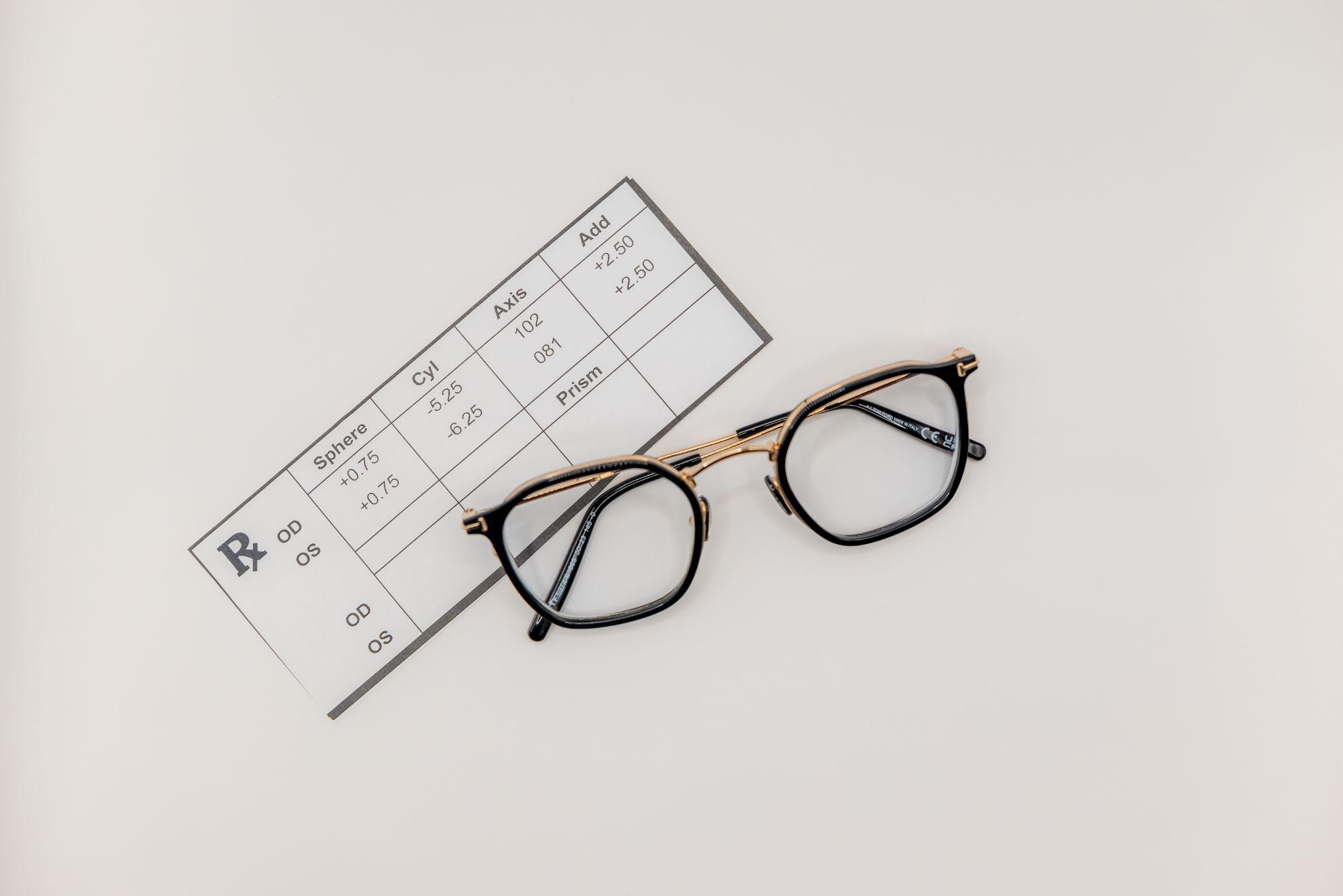
A prescription is a set of numbers, and those numbers only do their job once someone turns them into lenses that sit correctly in front of your eyes. After a comprehensive eye exam, you are free to take that prescription anywhere you like.
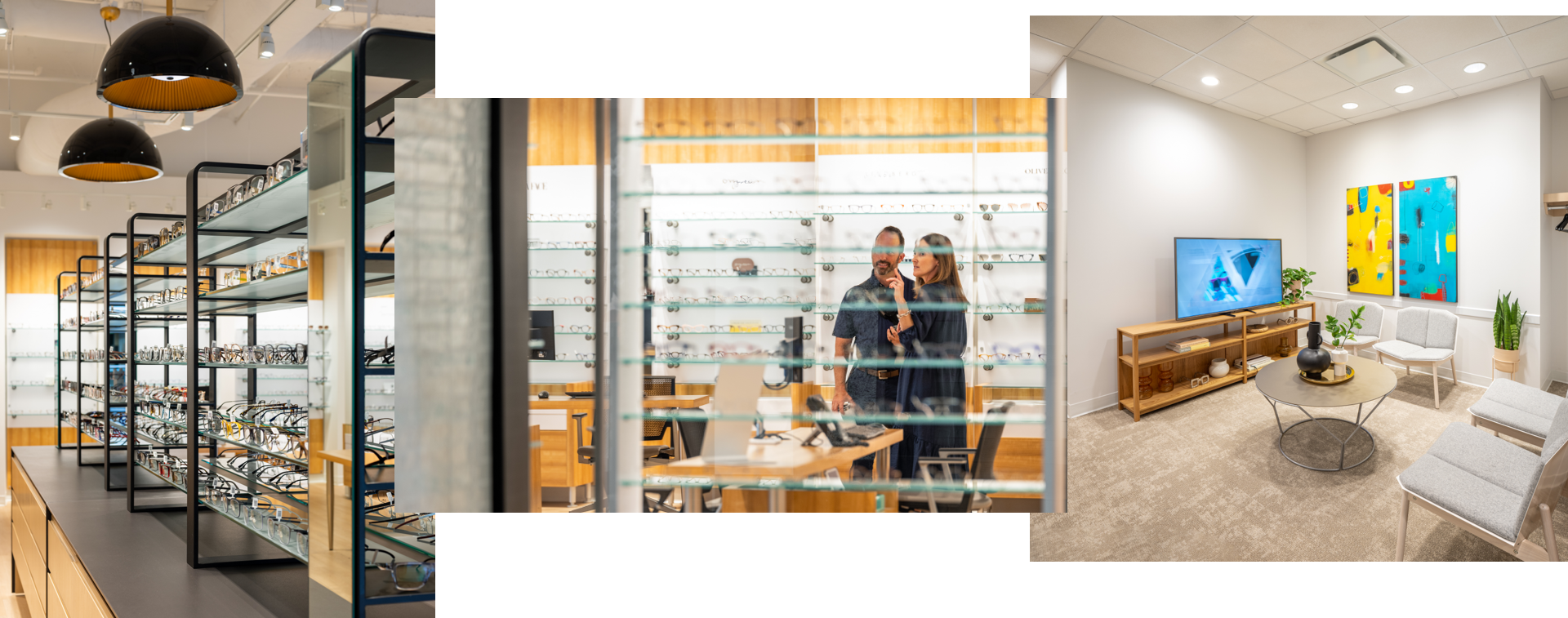
Buying your glasses where you had your exam keeps your prescription, measurements, and fitting under one roof, reducing inconsistencies when something needs adjusting.
One visit. One team. One record of your visual history.
The Measurements Your Prescription Leaves Out
Your prescription describes how your eyes focus. It says nothing about where the lens needs to sit. Opticians take 3 additional measurements which shape how your lenses perform once they sit on your face:
- Pupillary distance, or the space between the centres of your pupils
- Optical centre height, which positions the clearest part of the lens in front of your eye
- Base curve, the curvature of the lens surface
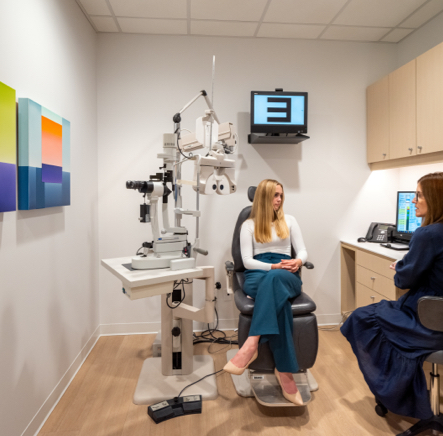
The optical team takes these in person, rather than estimating them from a photo on your phone.
Why Progressives and Bifocals Need Precision
Progressive and bifocal lenses hold more than one prescription in a single lens, so a few millimetres of placement error can make a huge difference. The optical team takes the measurements while you wear the exact frame you chose, since a different frame sits differently on your nose and ears.
Most people need progressives for the first time when presbyopia makes small print harder to read in their mid-40s. A problem with lens placement shows up in small ways. You raise your chin to read a contract, or you notice a dull ache behind your eyes by 3 in the afternoon. These can all say that you need to address your frames’ fit.
What an In-Person Fitting Adds
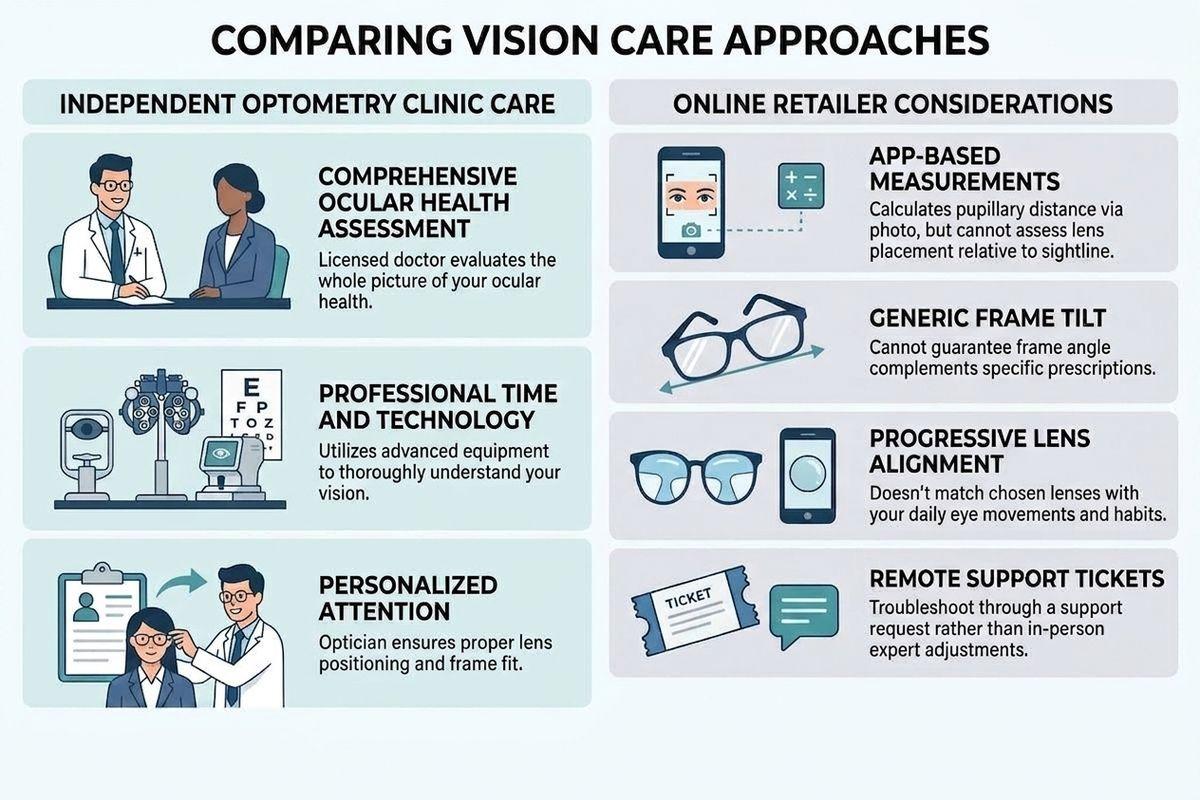
A website or an app may claim they can estimate the distance between your pupils from a photo taken at arm’s length, but it cannot see how the frame sits when you look down at your desk, or judge whether the tilt suits the prescription you were given.
If there is a problem with your glasses after you receive them, it is easily addressed at your optometrist’s office. A problem with an online order sends you into a support ticket and a waiting period
Frames That Keep Up with Your Week
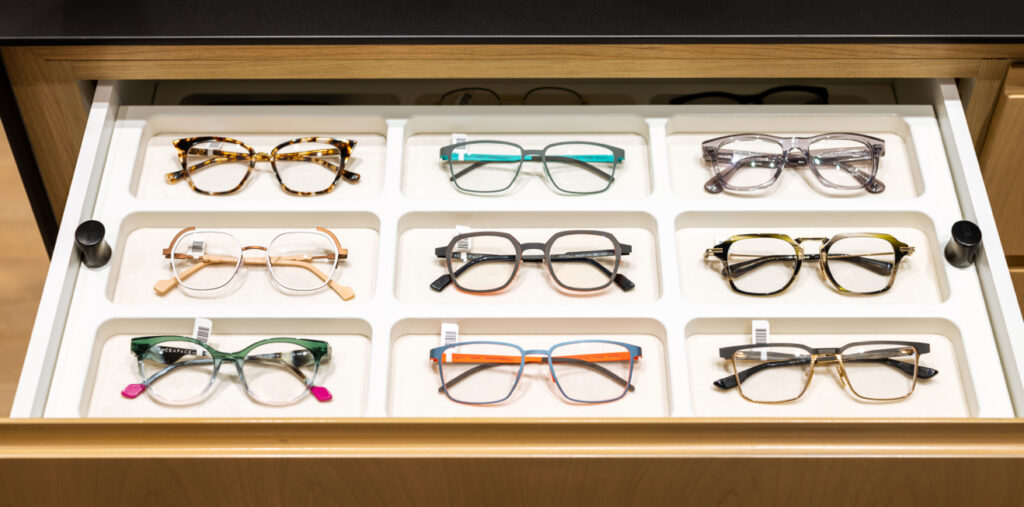
Your glasses go from a boardroom to a bike commute to a dinner reservation, sometimes in the same day. Durable materials and solid hinges are needed to keep up with that pace, and a proper fit keeps the frame from sliding down your nose. Materials like acetate or titanium tend to survive being folded, dropped, and pushed into a bag. These good quality materials are much more likely to be used in frames at your optometrist’s office than the cheaper nylon or nickel metal frames found online.
Opticians can steer you toward shapes that suit your face and the impression you want to make, and they will tell you which materials hold their alignment best over time. For example, if you spend your lunch hours outside, you can order prescription sunglasses from the same set of measurements.
Lens Choices for Screen-Heavy Days
If you spend 8 hours between 2 monitors, the lens deserves as much thought as the frame. A few options can make those hours easier:
- Anti-glare coatings reduce reflections from overhead lighting and screens
- Scratch-resistant coatings help your lenses stay clear through daily handling
- Thinner, lighter lens materials suit stronger prescriptions
- Photochromic lenses darken outdoors and lighten indoors as light shifts
Pairing the right lens with small workspace changes can also ease digital eye strain during long stretches at your desk.
Is Paying More for Glasses Worth It?
When you pay more for glasses, you should be paying for the quality and workmanship you deserve.
Lens material affects thickness, weight, and clarity, and it matters more as your prescription gets stronger. Coatings protect that clarity from glare and scratching. Frame construction determines how hinges and joints hold up after a year of daily folding.
A complex prescription can raise the cost too, since it calls for more specialized lens work. Once you know what sits behind the number, you can decide where to invest and where to hold back.
What to Watch Out for When You Shop
A few things should give you pause when you are comparing your options:
- Measurements skipped or taken from a self-submitted photo
- A frame that pinches your temples or leaves marks on your nose
- Vague answers about lens material or coatings
- No adjustments or repairs offered once the sale closes
That last one tends to matter more than people expect.
How An Optometrist Supports Your Vision
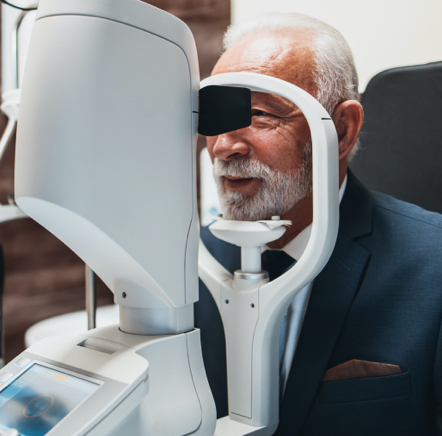
Frames loosen with wear. Screws work themselves out, and eventually someone sits on their glasses in the car. Most adjustments and minor repairs happen at the clinic while you wait.
An optical team can also walk you through warranty claims and insurance paperwork, which saves you from chasing forms between appointments. If a repair keeps your glasses for a few days, you may be tempted to fall back on an older pair, which comes with its own trade-offs. Instead, a local office can help you fast, rather than having to send off your glasses and wait for the fix.
Turn Your Prescription Into Glasses You Will Love to Wear
Bring your prescription to the same team that wrote it and let us handle the measurements and the follow-up. Talk with an optometrist at Downtown Vision Care about frames and lenses that suit your day, and request an appointment when you are ready to get started.