Your eyes work constantly, focusing and refocusing thousands of times before lunch. Every one of those small movements draws on energy, and that energy comes from what you eat.
During a comprehensive eye exam, an optometrist often finds clues that connect your daily meals to the condition of your eyes. Certain nutrients build and repair the tissues that support long-term ocular health, while others help protect the retina from gradual wear. What you eat has a direct effect on how well your eyes function today and how they hold up over the years.
Key Nutrients That Support Healthy Eyes
A few nutrients do most of the heavy lifting, and they show up in fairly ordinary foods.
Vitamins for Strong Vision
Vitamin A keeps your sight clear, especially in dim rooms or during an evening drive. Pair it with vitamin C and vitamin E, which work together to protect the small blood vessels inside your eyes.
Zinc plays a supporting role too. It carries vitamin A to the retina, where the real work happens.
Vitamin D and the B vitamins deserve a mention as well. They support the nerve signals that carry images from your eyes to your brain, and low levels have been tied to eye fatigue.
Helpful Fats and Antioxidants
Omega-3 fats, found in salmon and sardines, support the moisture layer that keeps your eyes comfortable by late afternoon.

Lutein and zeaxanthin act like a natural filter against harsh light. Find them in leafy greens such as spinach, kale, and collard greens. Add a handful to lunch, and give your eyes steady support through long screen hours.
These same nutrients are linked to a lower risk of age-related macular degeneration, a condition that affects central vision later in life. Building good habits now gives your eyes a foundation for the decades ahead.
Foods to Add to Your Plate
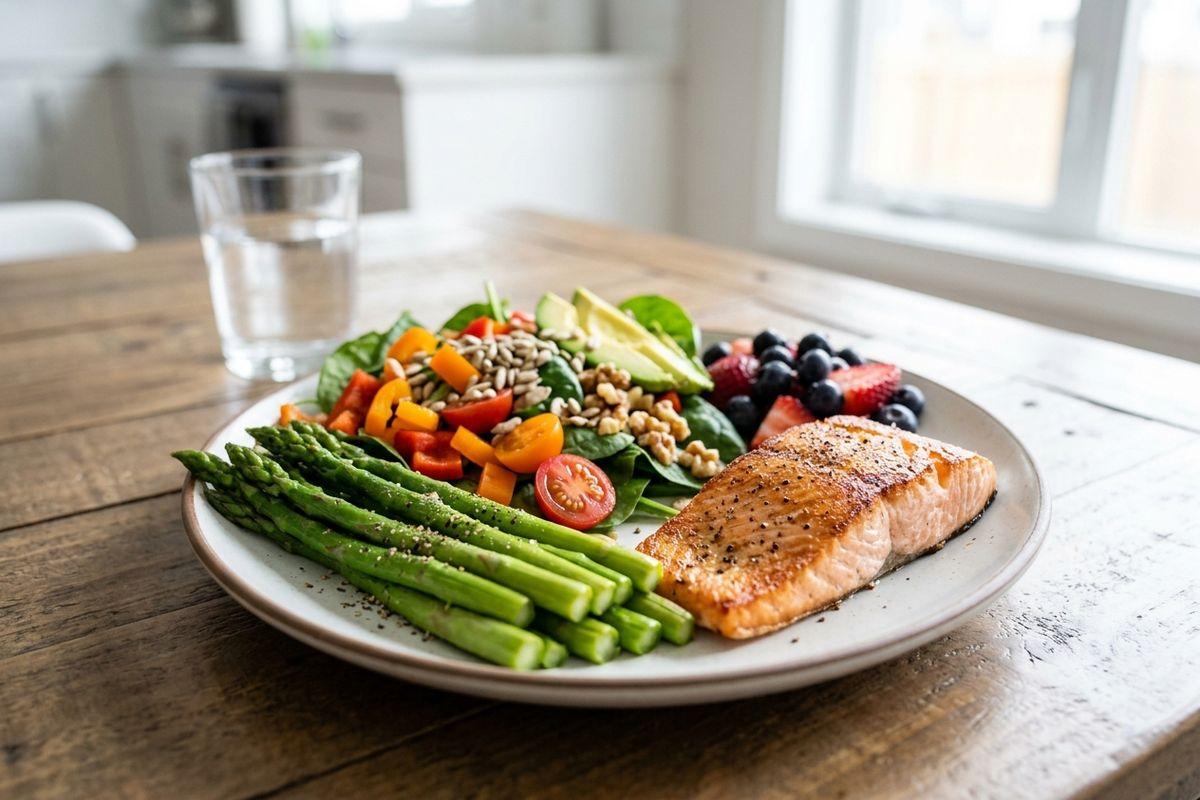
Reach for these foods regularly, and you cover most of your bases:
- Carrots and red peppers, rich in vitamin A and antioxidants
- Deep blueberries and blackberries, packed with protective compounds
- Nuts and seeds, such as almonds and sunflower seeds, for vitamin E and zinc
- Fish like salmon or mackerel, for omega-3 fats
- Eggs and beans, for protein plus eye-friendly nutrients
Mix a few of these into your week, and your eyes get steady support without much extra thought. A small bag of almonds at your desk doubles as a snack and a step toward better eye nutrition.
How Diet Shows Up During Your Eye Exam
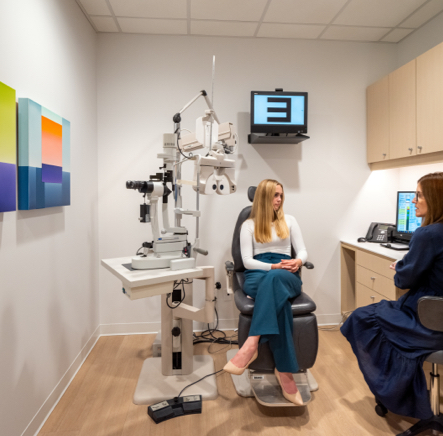
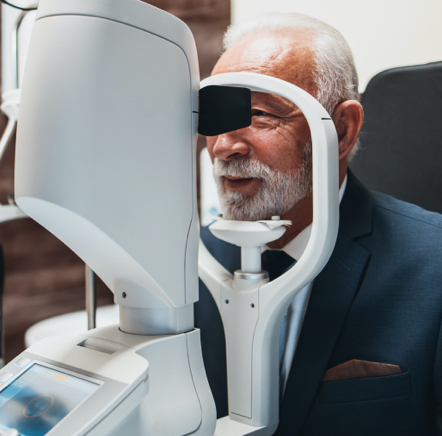
Your optometrist looks at more than your prescription.
What Your Optometrist Reviews
Dryness, slow focus, or changes at the back of the eye can point to gaps in your diet. When your optometrist notices these changes, a discussion about diet may be important.
That kind of attention matters most for professionals who spend long hours on screens. Small gaps in your nutrition tend to show up first as fatigue rather than anything dramatic.
Practical Tips for Busy Professionals
Long workdays make healthy choices harder than they should be. Your optometrist can suggest simple swaps, like trading a midday pastry for a handful of walnuts and berries.
Water matters too. Keep a glass at your desk, and help your eyes stay moist through long meetings. Take a short screen break every 20 minutes. This habit can help ease the tired, gritty feeling that builds by evening, a version of the 20-20-20 rule worth adopting.
Sleep counts as part of the equation too. A full night gives the surface of your eyes time to recover from a day of screens and dry office air.
Pair Good Habits with the Right Eyewear
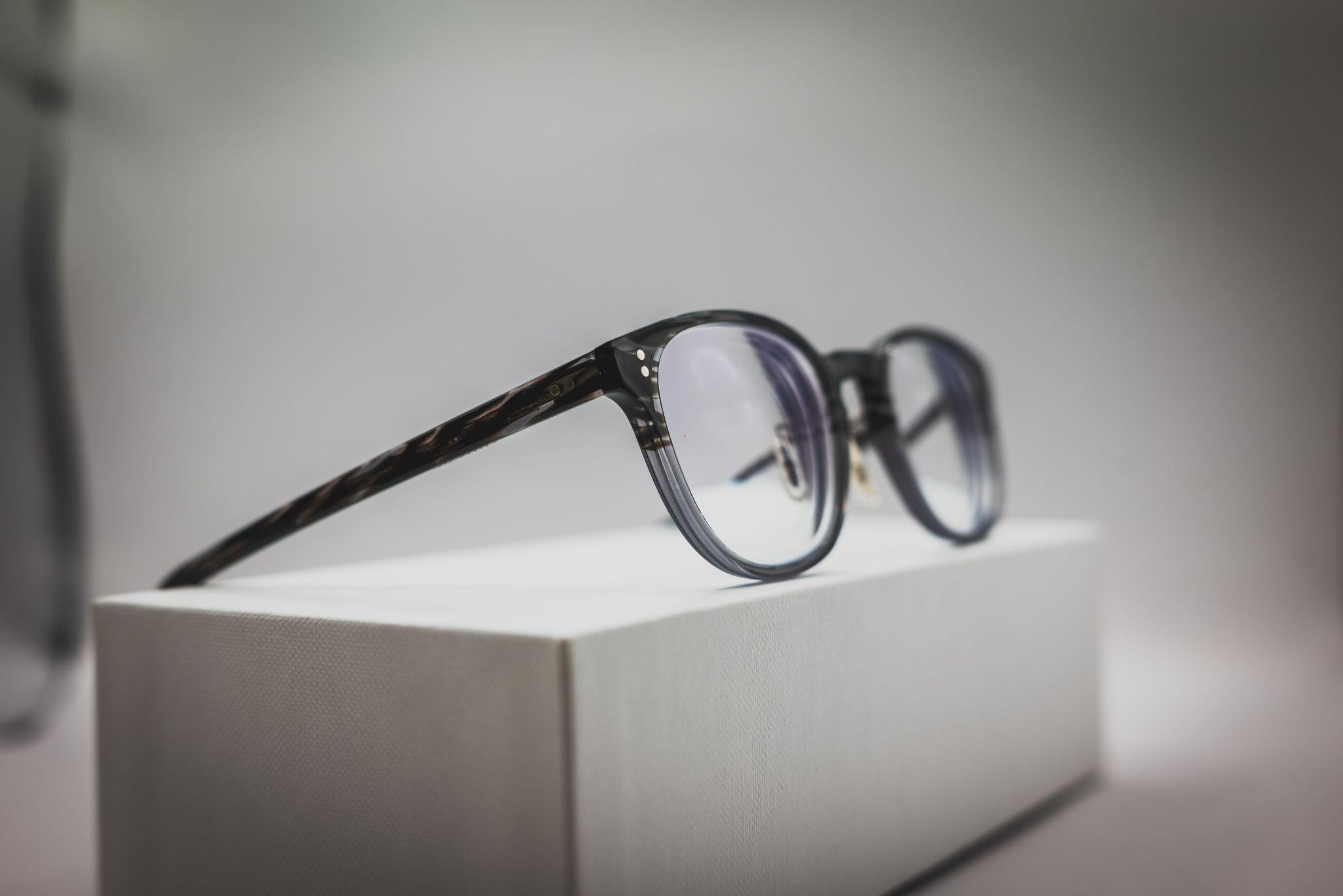
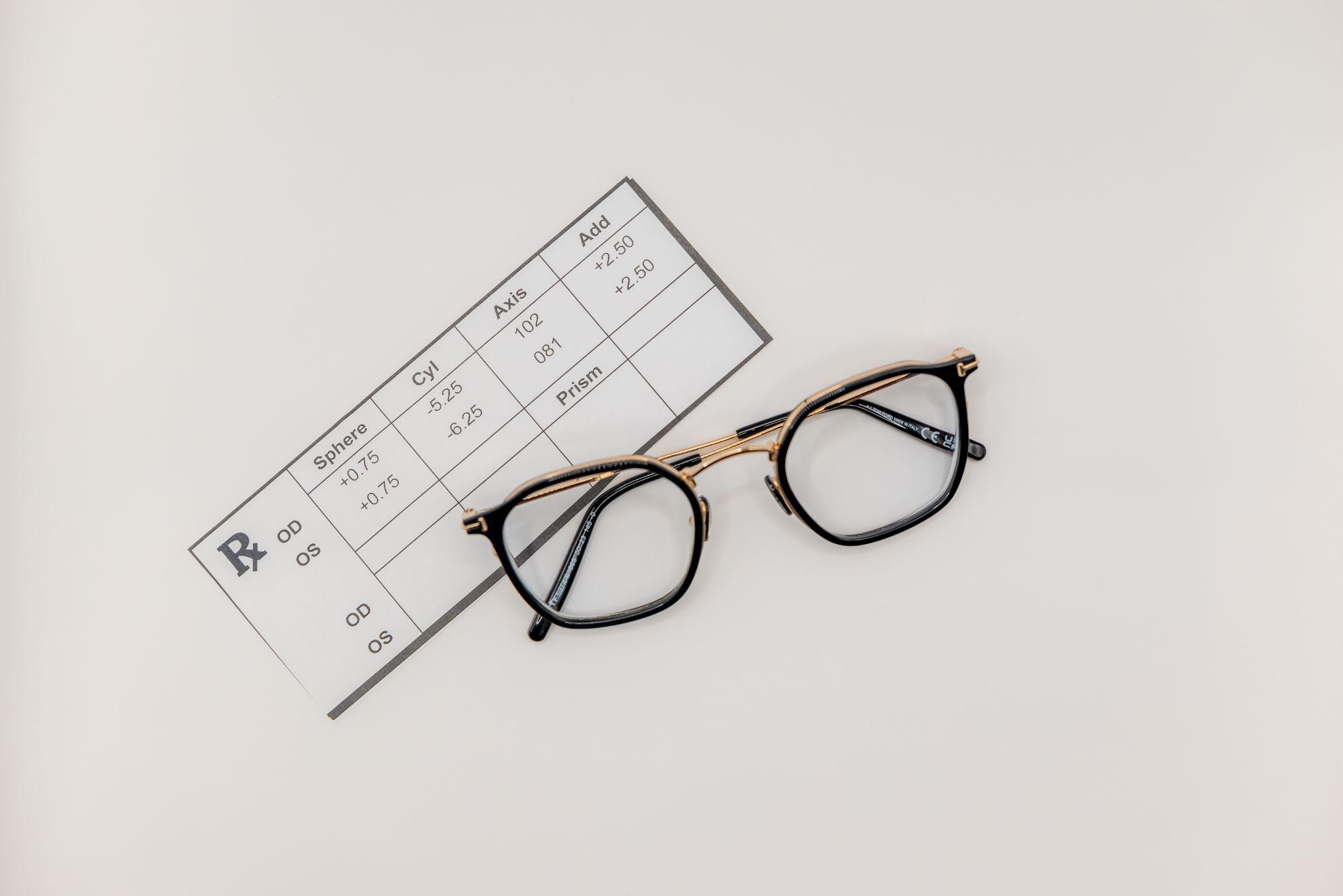
Food supports your eyes from the inside. The right frames support them from the outside, and together they keep your vision comfortable through a full day.
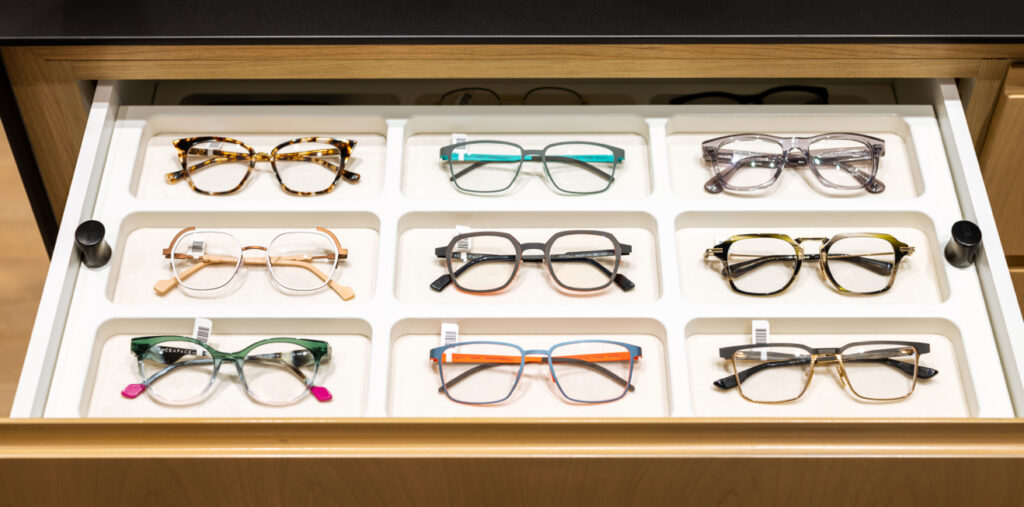
The right glasses can complement your healthy choices in practical ways. Lenses that cut glare ease the strain of bright screens, and a frame that sits well stays in place during back-to-back meetings.
Frames built for your routine make a real difference. Solid hinges hold up to daily folding, and a proper fit keeps the weight off your nose so you forget you are wearing them at all.
Give Your Eyes a Reason to Thank You
A few small changes to your plate, paired with the right pair of glasses, go a long way toward keeping your eyes comfortable at your desk and sharp behind the wheel.
When your eyes feel dry, your focus drifts, or your current frames slip, treat that as your cue to act.
Downtown Vision Care welcomes professionals who want straightforward advice on both nutrition and eyewear. Request your appointment today, and give your eyes the support they deserve.