Have you found yourself squinting at fine print more as you get older or holding your book a little further away, or wanting more light to see fine print? You might be dealing with presbyopia—one of several common eye conditions that can sneak up on us as we age.
Presbyopia is like other refractive errors, such as myopia, and has several potential forms of treatment. While it may be similar, some treatments for refractive errors, like laser eye surgery, may not have similar results for treating presbyopia or work in the same ways.
While laser eye surgery can help treat presbyopia, it isn’t always a recommended solution. Instead, your optometrist may recommend a procedure called refractive lens exchange (RLE). RLE involves replacing your eye’s natural lens to help you see clearly again.During an eye exam, we can help you determine which option is right for your eye health and vision needs.
What Is Presbyopia?
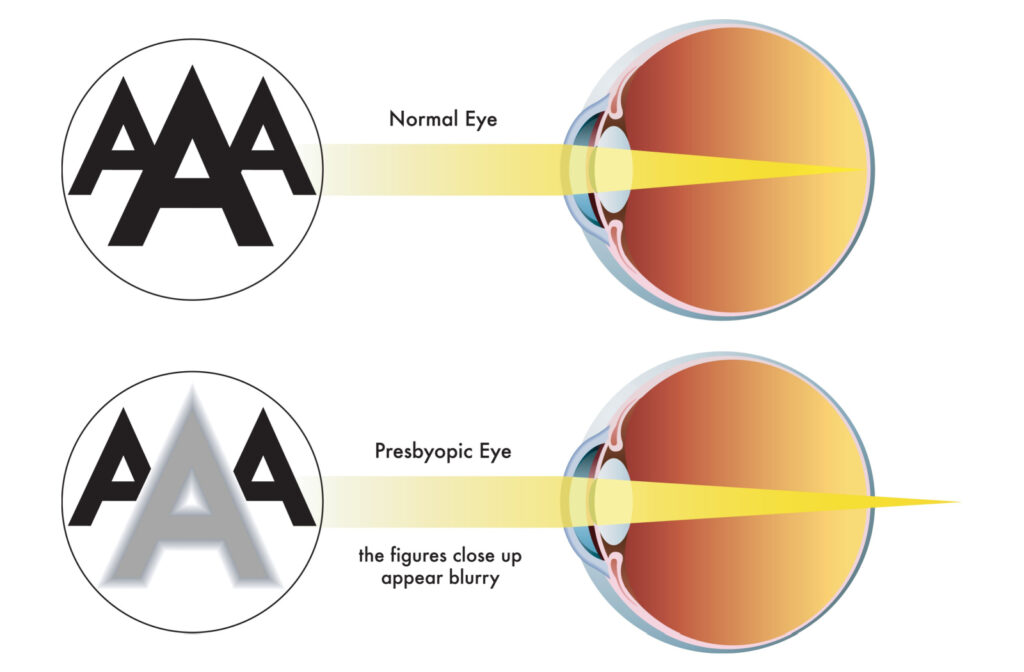
When your eyes are switching from focusing on near objects to far away, the lens inside the eye needs to slightly change shape.
When you’re younger, your lens is flexible and can easily switch between distances. But as you get older, your eyes start to undergo several changes, and your lens starts to lose its flexibility. This makes it harder for the eye to adjust and focus at different distances.
Presbyopia results in blurry vision up close as a result of your eye’s natural lens losing flexibility. It’s like the eye’s version of getting older, and it usually starts in our 40s. Fortunately, it can be properly diagnosed during an eye exam and treated with several different techniques.
What’s Life Like with Presbyopia?
Living with presbyopia can be frustrating since it can directly affect how well your eye adjusts between distances. Some common symptoms and challenges you might face with presbyopia include:
- Struggling to read small print, especially in dim light.
- Finding yourself holding reading material further away to clear up the words.
- Dealing with headaches or eye strain from reading or doing close-up tasks.
- Feeling exhausted after activities that require near vision.
These challenges can make simple everyday tasks feel like a chore and can have a significantly negative impact on your day-to-day life.
Can Laser Eye Surgery Fix Presbyopia?
Presbyopia can be treated with laser eye surgery—but it’s not always the go-to option. While treatments like LASIK and PRK can be used for other vision issues like myopia, hyperopia, and astigmatism, they aren’t always the first choice for presbyopia. Instead of laser eye surgery, a procedure called refractive lens exchange (RLE) may be recommended.

What’s Refractive Lens Exchange?
Refractive lens exchange, or lens replacement surgery, is a procedure where your eye’s natural lens gets swapped out for an artificial lens. It’s similar to cataract surgery, but instead of removing a cloudy lens, it takes out a clear but hardened lens.
Here’s how it works:
- Your eye gets numbed with anesthetic drops.
- A cut is made on the edge of your cornea.
- A small instrument breaks up and removes your natural lens.
- A new artificial lens is inserted through the same cut.
Fortunately, the cut is so small that it can typically heal without sutures. The healing process is rarely complicated. Your recovery may involve a few days of discomfort and a couple weeks of light sensitivity.
Your new lens may be a multifocal lens, meaning that it has several different focal points to help provide clear vision at different distances. By providing clear vision at multiple distances, RLE can give those with presbyopia the convenience of avoiding glasses and contacts in the future.
How Do We Treat Presbyopia?
If you’re not a fan of the idea of RLE surgery, there are several other options for treating your presbyopia, including:
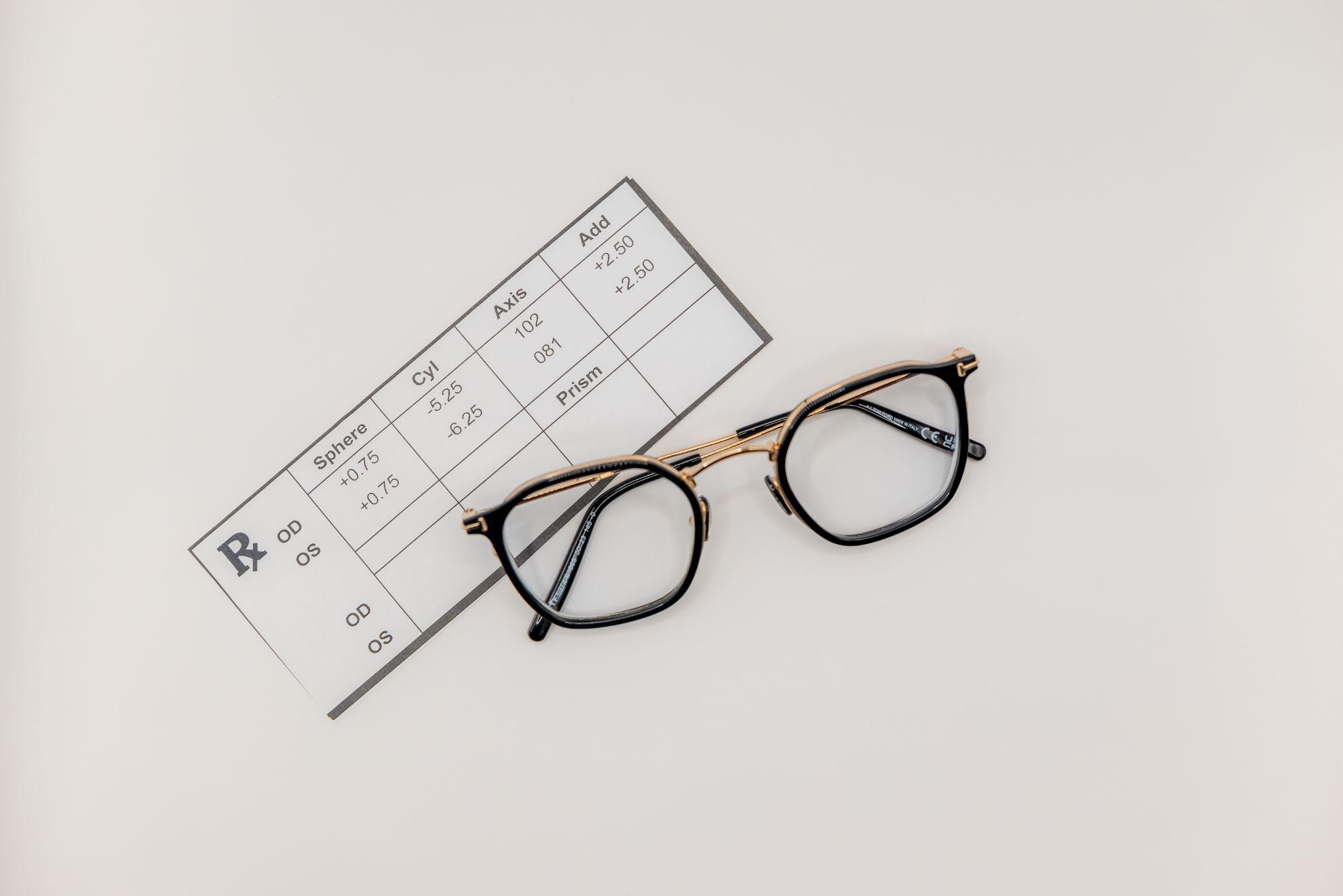
- Reading glasses
- Bifocals or multifocals
- Progressive lenses
- Multifocal contact lenses
- Monovision contacts, where one eye is fitted for nearby vision and the other is fitted for distance.
In some situations, an optometrist may recommend a form of LASIK, depending on your eye health and visual needs. When this type of surgery is used for presbyopia, one eye is corrected to work for near vision while the other is corrected for distance vision.
Laser eye surgery isn’t suitable for everyone with presbyopia, though. If you’re considering it, you’ll need to book a laser eye surgery consultation with an optometrist.
What to Do if You Have Presbyopia
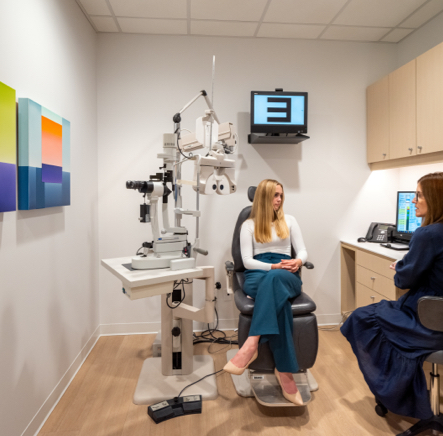
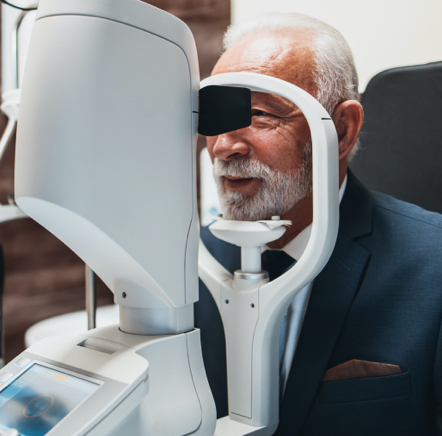
If you’re dealing with symptoms of presbyopia, come visit us at Downtown Vision Care in Calgary for a comprehensive eye exam. Our team can examine your eyes and help you find a path toward clear vision at all distances. Your vision is important to us. Request an appointment today!