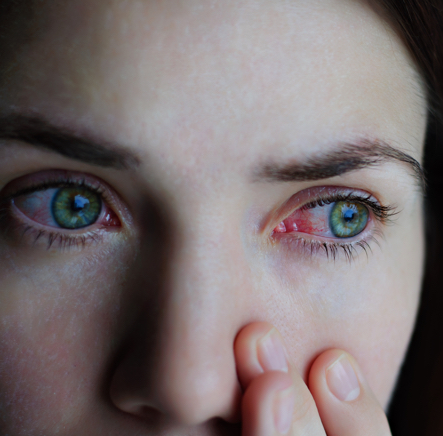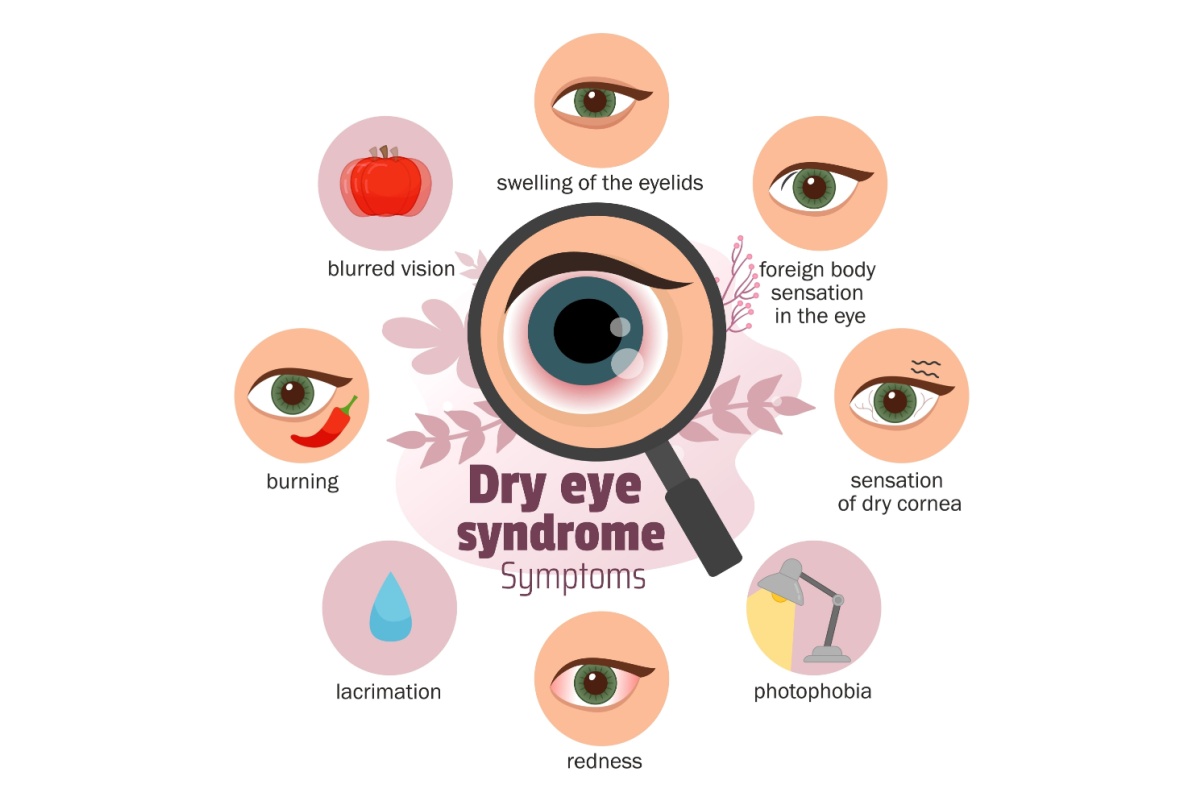
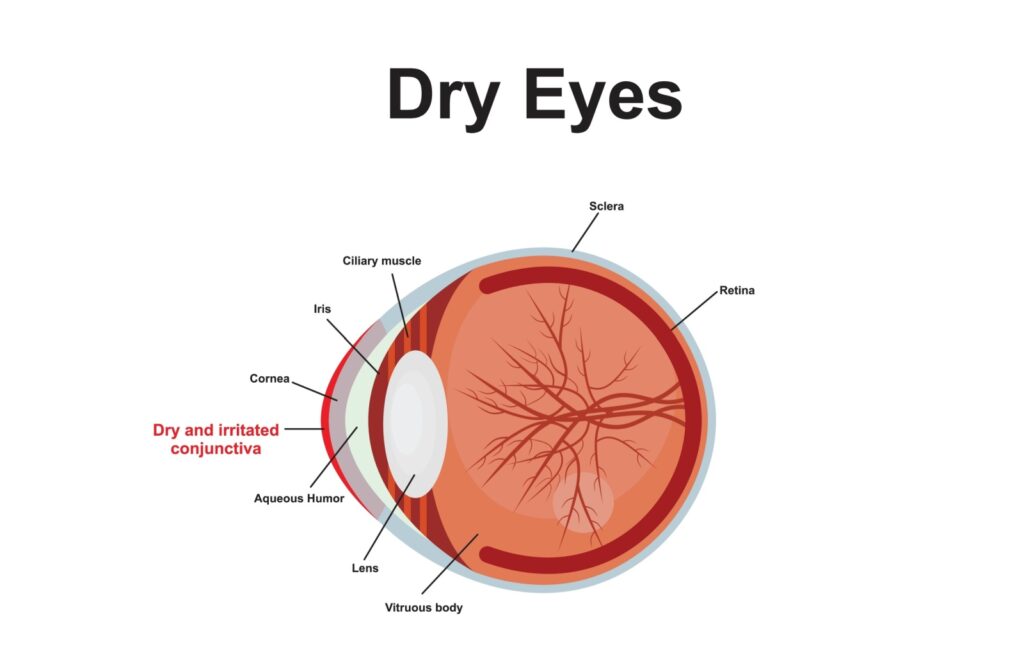
Wearing contact lenses can be an incredible convenience, offering clear vision without the hassle of glasses. However, this convenience comes at a price for many—dry eyes. Several things can cause dry eyes with contacts, including:
- Reduced blinking
- Environmental factors
- Poor lens fit
- Lens material
- Systemic conditions
You are not alone if you have experienced that burning, gritty, irritating sensation after wearing contacts. Dry eyes are one of the most common complaints among contact lens users. Fortunately, there is often a simple solution your eye doctor can recommend after examining your eyes to determine what is causing your dry eye symptoms.
Common Causes of Dry Eyes with Contact Lenses
Dry eyes can be triggered by multiple factors when you wear contact lenses.
Reduced Blinking
Blinking slows down naturally when you focus on a task such as using a computer, reading, or watching television. Add contact lenses into the mix, which can also make you blink less, and this reduced blinking is exacerbated.
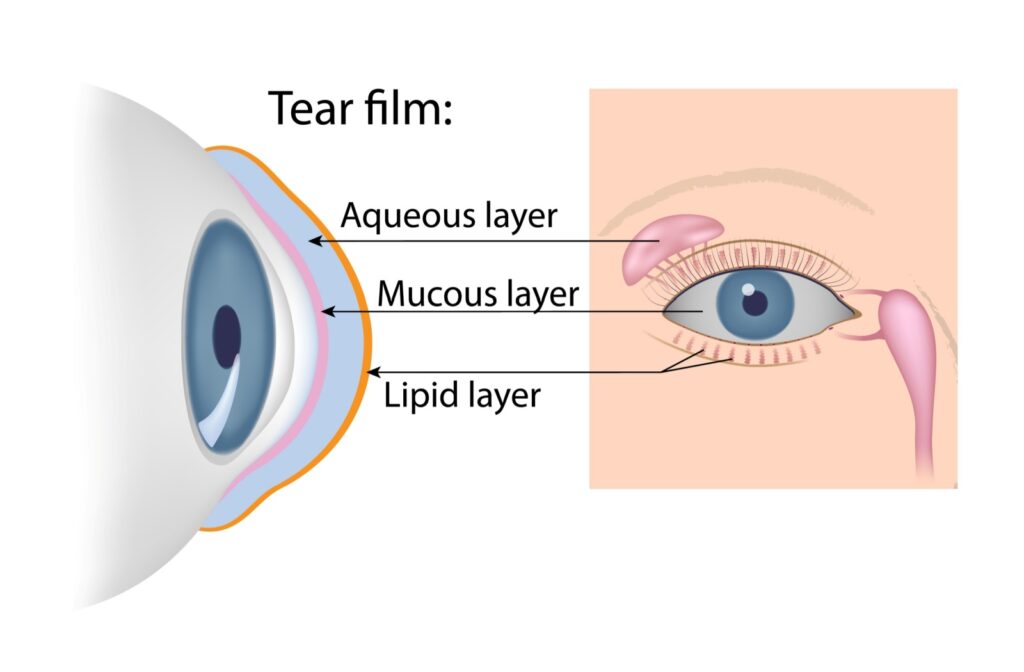
Blinking stimulates tears to be released onto your eye and then spread evenly across your eyes, keeping them moisturized. Without regular blinking, tears can evaporate too quickly, leaving your eyes dry and uncomfortable.
Environmental Factors
Environmental conditions can significantly impact contact lens comfort. Dry climates, air-conditioned rooms, or exposure to wind can cause the moisture levels in your eyes to drop dramatically. Even being in a space with a strong fan or facing a heater can accelerate tear evaporation.
Contact lens wearers are particularly susceptible to these environmental factors, as the lenses can reduce the natural tear film’s ability to stay evenly distributed.
Poor Lens Fit
The fit of your contact lenses plays a crucial role in your eye health. If your lenses are improperly fitted, they can interfere with how your natural tears function. Ill-fitting lenses may not sit correctly on the cornea, exposing areas of your eyes and making them more prone to drying out.
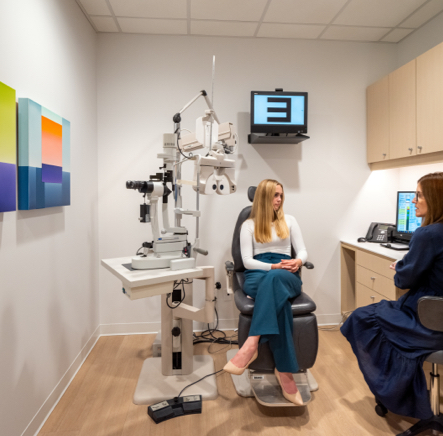
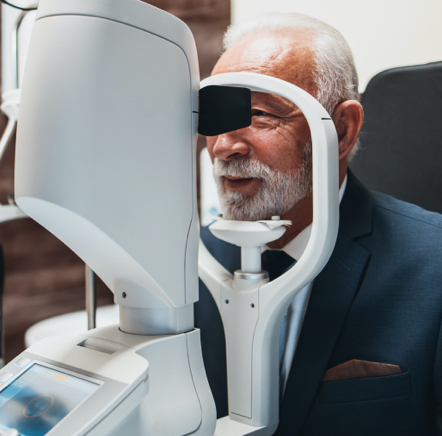
Properly fitted contact lenses are essential, which is why a professional fitting by your eye doctor during a contact lens exam is so essential. During these exams, your optometrist takes various eye measurements and determines your prescription.
Lens Material
The type of material your contact lenses are made of can also influence dry eyes. Some lenses do not retain moisture as well as others. Advances in contact lens technology have led to materials such as silicone hydrogel, which allows for better oxygen flow and moisture retention.
Prevention & Solutions for Dry Eyes with Contact Lenses
While dry eyes can be frustrating, numerous ways exist to address and prevent this problem. From simple lifestyle changes to investing in the right products, minor adjustments can sometimes make a big difference.
Use Rewetting Drops
Rewetting drops, also known as artificial tears, are one of the easiest ways to combat dryness caused by contact lenses. They are designed to restore moisture and soothe the eyes without damaging the lenses.
Choosing an option specifically formulated for contact lens users is essential to avoid irritation or lens clouding. Keep a bottle handy throughout the day and apply as needed.
Practice Proper Lens Care
Maintaining a consistent lens care routine is crucial for eye health and comfort. Always clean and store your lenses as directed by your optometrist. Use only recommended contact lens solutions and replace your lenses on schedule. Neglecting lens hygiene can lead to protein build-up, further exacerbating dryness and discomfort.
Invest in a Humidifier
If you spend a lot of time in air-conditioned or heated environments, your indoor air may lack sufficient humidity, which worsens dry eyes. Adding a humidifier to your home or workspace can help maintain moisture levels in the air and relieve dry eyes.
Schedule Regular Eye Exams
An essential step in managing dry eyes is to stay proactive about your eye health. Regular eye exams enable your optometrist to monitor your contact lens fit and assess your eye health. Your optometrist can also recommend the best lens material for your specific needs and suggest additional dry eye therapy treatments, such as warm compresses, Omega-3s, prescription eye drops, or alternative lens options.
How to Keep Your Eyes Healthy & Comfortable
Dry eyes with contact lenses are common, but they do not have to disrupt your daily life. By understanding the underlying causes, you can take steps to protect your eyes.At Downtown Vision Care, we are here to help. Our team of optometrists can assess your situation, recommend the most suitable solutions, and ensure your contact lenses are doing their job without causing discomfort.
Request an appointment with us today and experience the relief your eyes deserve.